
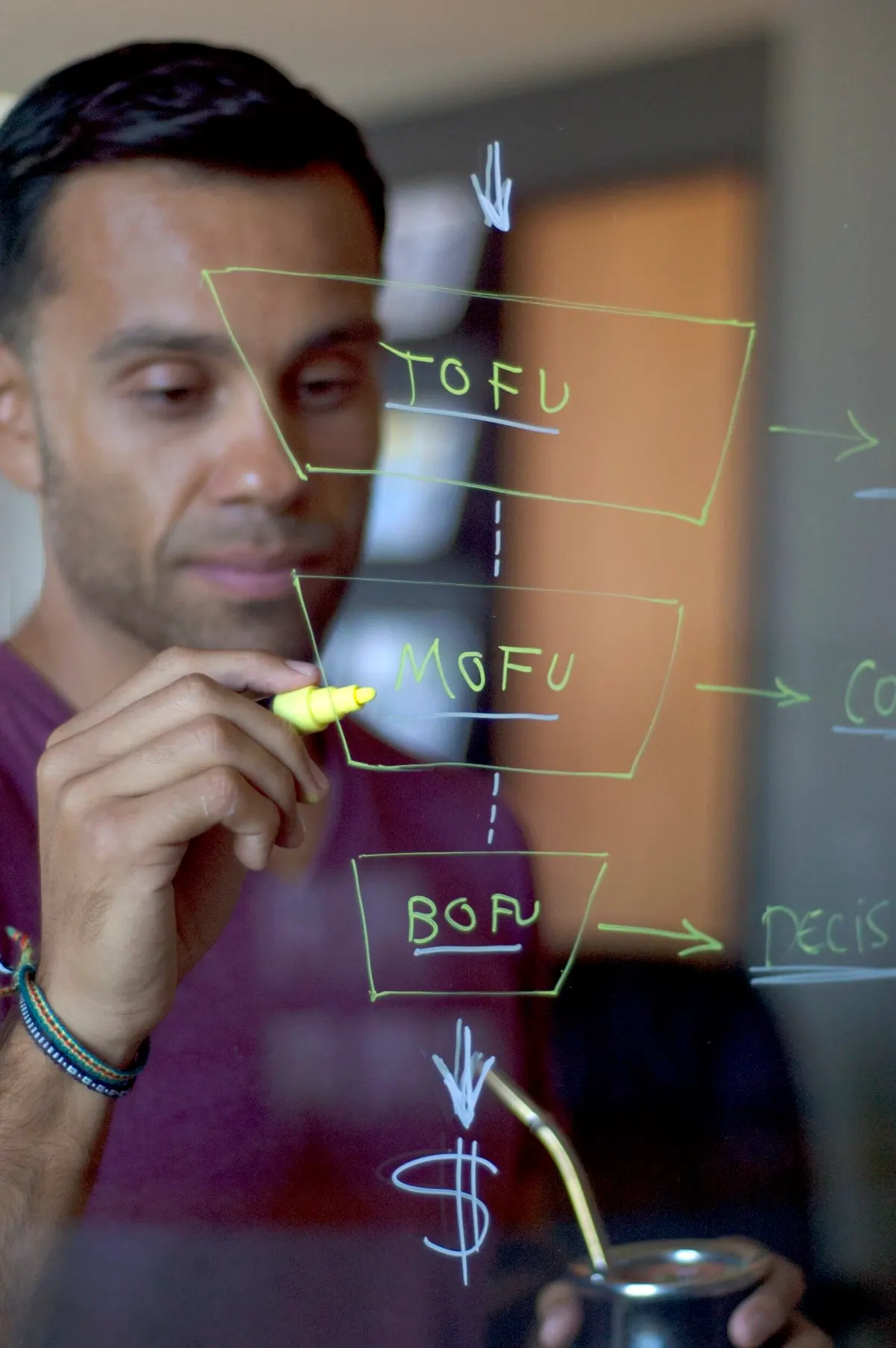
Every startup GTM loop eventually gets a presentation round bolted onto it. A VP of Sales wants to see the 30-60-90. A CMO wants a teardown of the current funnel. A founder wants the candidate to pitch the product back. The instinct is sound — you are about to hand someone your pipeline, and you would like to see them think before you do. The problem is almost never the exercise. It is that the exercise gets added to a loop that already had four conversations in it, with no explanation, no time cap and no pay, and then your two best finalists disappear in the same week.
Run the presentation round when it replaces interview steps rather than extending the loop, when it fits inside a couple of hours of prep, and when it is defended live and scored like a structured interview. Outside those three conditions, you are paying a real conversion cost for a signal that is weaker than you think it is.
Why hiring managers like presentation rounds
There is a legitimate reason this round keeps showing up. Hiring managers want decision support, not more opinions. The single most common reason employers ran assessments in 2025 was to help hiring managers make better selections — 58%, up 14 points from 2024. That is exactly the instinct behind a GTM presentation: the interviews produced four people who all interview well, and somebody needs a tiebreaker that looks like the job.
For go-to-market roles the appeal is sharper still, because the artifact is the job. An account executive presenting a discovery plan is doing the thing you hired them to do. A demand gen lead walking a channel-mix model is showing you their actual reasoning about CAC. A CSM running a mock QBR is one step from the real one. Unlike a coding test, there is no translation problem — presenting is the deliverable.
So the round survives because it feels like the most honest part of the process. It often is. What it is not is the most predictive part.
The validity data undercuts the artifact, not the conversation
For two decades the field treated work samples as near-gold-standard prediction. A 2021 re-analysis of the underlying meta-analytic estimates corrected for range restriction assumptions and cut the number hard: the work sample validity estimate fell by .21, from .54 down to .33. The exercise still predicts. It just does not predict the way the folklore says.
Meanwhile the same re-analysis puts structured interviews at .42 and unstructured interviews at .19. Read those three numbers together and the design conclusion writes itself.
| Selection method | Validity estimate | What it means for your loop |
|---|---|---|
| Structured interview | .42 | Your highest-yield hour. Protect it first. |
| Work sample | .33 (was .54) | Useful, weaker than assumed — not a substitute for structure. |
| Unstructured interview | .19 | The “let’s just chat and see how it feels” round. Cut this one. |
The presentation round is worth running when it displaces the .19 conversations — the second founder chat, the culture-fit coffee, the third panel that asks the same four questions. It is not worth running when it displaces a structured interview, and it is actively expensive when it displaces nothing at all and simply becomes step five.
If the presentation is replacing a vibes round, run it. If it is replacing nothing, you have added a tax, not a test.
The practical move: score the presentation as a structured interview. Same rubric discipline, same anchored questions, same interviewers scoring independently before they confer. The artifact is the prompt. The live defence is where the signal lives.
How candidates actually experience it
Now the other side of the table, because this is where good loops die quietly.
In a survey of candidates on take-home assignments, 58% said they deserve compensation for completing them — and only 4% reported ever receiving it. That gap is the whole feeling. It is not that your finalists think a presentation is beneath them. It is that a majority have already priced the work as work, and virtually none of them have ever been paid for it, so the request lands as a free sample rather than a fair test.
The drop-off is measurable. 16% of US candidates — one in six — have walked away from a process at the moment they received a take-home assignment. Not after a bad interview. Not after a lowball. At the moment the assignment email arrived. If you are running a six-person finalist pool, that is one person gone before anyone evaluates anything, and it is rarely the weakest candidate — the strongest finalists have the most alternatives and the least patience.
Which brings in the market context. 44% of candidates reported receiving multiple offers in their most recent hiring process. Even in a softer market, close to half your finalists are running a parallel process. Every unpaid, unexplained hour you add is an hour they could spend on the company that did not add it.
And the mechanism of withdrawal is exactly the one a sprawling presentation round triggers. The top reason candidates withdrew from processes in 2025 was that their time was disrespected during interviews and appointments — cited by 32% of those who withdrew. Nearly a third. Not compensation, not the role, not the manager. Time.
Cap it at two hours and say so in writing
Candidates have told us what the ceiling is. Over 80% say a take-home should take four hours or less, and a plurality say two hours. Treat two hours as the design target and four as the hard ceiling.
A two-hour cap is not a compromise on rigour. It forces you to ask one sharp question instead of five vague ones, which is better assessment design anyway. “Here are three anonymised accounts from our pipeline — pick one, tell us how you’d run it, ten slides maximum, we expect this to take about two hours” beats “build us a go-to-market strategy” on every dimension that matters, including what you learn.
| Design choice | Costly version | Version that converts |
|---|---|---|
| Position in loop | Added as a fifth step | Replaces two unstructured conversations |
| Scope | ”Build our GTM plan” | One account, one question, ten slides |
| Prep time | Open-ended | Stated cap: ~2 hours |
| Brief | Sent by coordinator, no context | Sent by hiring manager, with the rubric attached |
| Delivery | Submitted and reviewed offline | Defended live, 20 min present / 25 min questions |
| Proprietary ask | Real roadmap, real accounts, real named data | Anonymised or public inputs only |
| Pay | None, unexplained | Stipend, or an explicit explanation of why not |
Share the rubric with the candidate before they build. Hiring managers flinch at this; they shouldn’t. You are not testing whether someone can guess your evaluation criteria — in the actual job, they would know the criteria. Publishing the rubric removes the lottery and raises the ceiling on what you learn.
When to run one — and when to skip it
The round earns its place in some loops and taxes others. Role seniority and the realism of the artifact are the two variables that decide.
| Role | Run a presentation round? | Why |
|---|---|---|
| VP Sales / VP Marketing / CRO | Yes | The territory plan or channel model is the first 90 days. Highest-stakes hire, biggest information gap. See sales leadership search. |
| Product marketing | Yes | Positioning and narrative cannot be assessed by conversation alone. |
| Enterprise AE | Often | A live mock discovery or exec-pitch beats a deck. Keep it conversational. |
| Mid-market AE | Conditional | Only if it replaces a panel round — see the AE hiring guide. |
| Marketing ops / RevOps | Rarely | A scoped technical conversation reveals more than slides. |
| SDR / BDR | No | You are hiring for coachability and reps. Use a live call block instead — SDR hiring. |
| Any role where you’re down to one finalist | No | You have no comparison to make. You are just risking the close. |
Three additional skip conditions, regardless of role:
You are hiring in a competitive window. If multiple companies are circling the same shortlist, the loop that moves in days, not weeks, wins. A presentation round adds a scheduling cycle on both sides.
You cannot say what you’re testing. If the hiring manager cannot name the three things the deck will reveal that the interviews did not, the round is theatre.
You want free strategy. Asking finalists to solve a live problem on your actual data is the single fastest way to torch your employer brand in a GTM talent market where everyone knows everyone. Anonymise the inputs, every time.
Make the round feel like respect, not homework
The difference between a presentation round that closes finalists and one that loses them is almost entirely framing and operational discipline.
Pay, or explain
A $300-$500 stipend for a final-round exercise costs less than one extra week of an open quota-carrying seat and lands you in the 4% of processes that compensate. If finance won’t approve it, the fallback is honesty: tell candidates exactly why the round exists, exactly how long it should take, and exactly how it shortens the rest of the loop. Unexplained work feels extractive. Explained work feels like a preview of how you operate.
Give them something back
Send every presenting candidate written feedback within 48 hours, whether they advance or not. The people who present and get rejected into silence are the same people your next search needs.
Decide fast after the defence
The round compresses the loop only if the decision compresses with it. Panel scores in within 24 hours, decision within 48. Given that 44% of finalists are weighing multiple offers, a week of internal deliberation after someone built you a deck is how top-tier talent ends up somewhere else.
Audit the whole loop, not the round
Most broken GTM loops are not broken because of the presentation. They are broken because nobody has counted the total candidate hours end to end. Add it up: screens, panels, prep, travel, follow-ups. If the number is north of eight hours of candidate time, the presentation is not your problem — your loop is. More hiring-process design in our guides and insights.